
Top stories · 27 October 2026
Oracle applications are coming into ChatGPT—but permissions remain the real product
OpenAI and Oracle announced connected business applications and new Oracle offerings powered by OpenAI. The integration can shorten hand-offs, but it does not erase the source system’s permissions or the need for approvals.
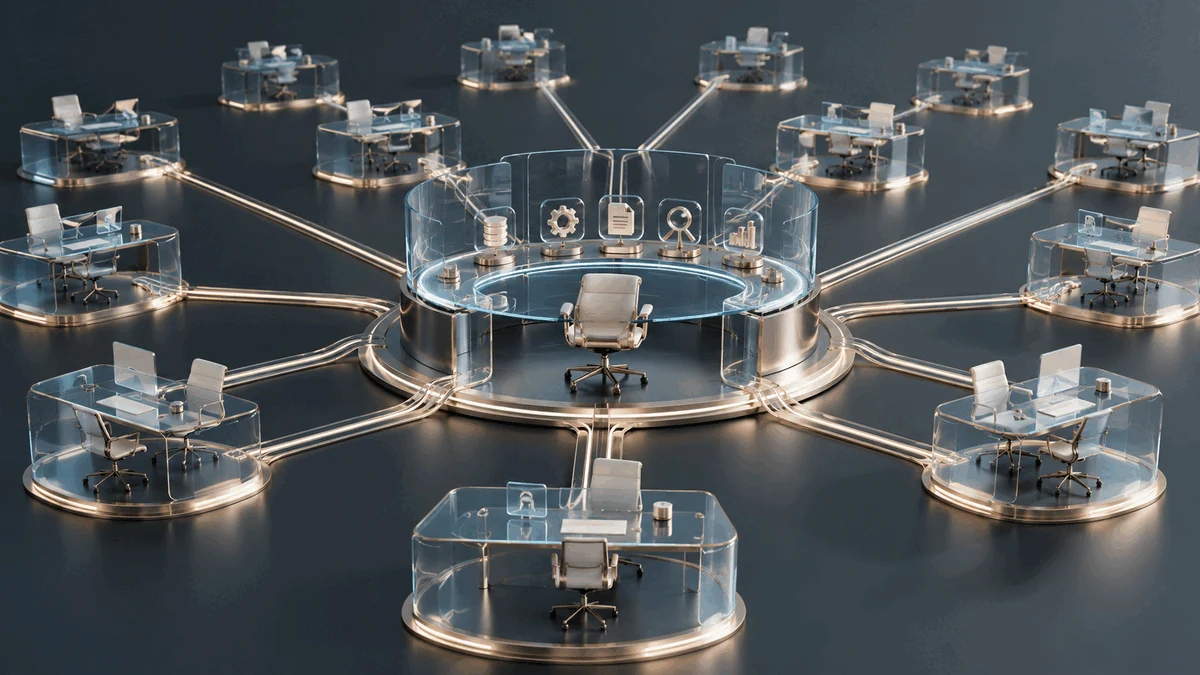
Who it affects
Finance, purchasing and operations teams that already work in Oracle applications and want to bring those records into a conversational workspace.
Why it matters
Answering a business question often means finding a record in one system, copying it elsewhere and asking someone to act on it. Connecting those steps could reduce copying, but only if the assistant sees the right records and hands consequential decisions to the right person.
What happened
OpenAI and Oracle describe an Oracle AI Workspace being developed to connect Oracle business applications with ChatGPT. The announcement is a product direction, not confirmation that every customer can already use every integration.
The proposed connection combines conversational requests with organisation-controlled access and approvals. Its practical value would come from using business records in context, rather than asking staff to re-enter the same information in a chat.
What to do with it
- Enterprise
Pilot a read-only month comparison with known invoices. Accept the explanation only if price and quantity effects reconcile to the total and every cited record is available to the reviewer.
- Small businesses
Ask your supplier which integrations are actually available on your plan; a partnership announcement is not a reason to replace working software today.
- Individuals
When using connected business data, ask for the underlying record and date, especially when the answer compares totals.
From a question to a permitted action
A request such as “Why did purchasing costs rise?” needs records, dates and a consistent definition of cost. The assistant must retrieve permitted information before it can compare periods. If a record is missing, a fluent answer cannot fill that gap reliably.
Reading an invoice and paying it are different operations. A useful connected workspace should make the transition visible: show the records behind an explanation, then separately identify any proposed change and the approval it needs.
Worked example: explaining a purchasing increase
Hypothetical records: September invoice S1 contains 100 units at $8, or $800. October invoice O1 contains 120 units at $9, or $1,080. Holding September’s price fixed, the extra 20 units add $160; the $1 price rise across October’s 120 units adds $120. Together they explain the $280 increase. The answer should cite both invoice IDs and show that calculation.
If O1 contains only a total, the assistant can report the $280 difference but cannot attribute it to price or quantity. The correct result is a request for the missing line items, not an invented explanation. Accept the draft only when its components reconcile to the total and its record links are accessible to the reviewer; paying or changing the order is a separate operation.
Terms to know
- Connector
- A link through which one application requests data or actions from another; it does not automatically grant access to everything in that system.
- Approval boundary
- The point where a proposed action must wait for an authorised person or business rule before it can change a record or commit money.
What the sources show
- Confirmed
The companies have announced the planned workspace and organisation-governed access; the source does not establish universal customer availability.
- What may follow
Less copying between applications could help staff investigate questions, if record retrieval and approval steps work reliably in their own organisation.
- What is not established
The announcement does not establish that a conversational request can bypass Oracle permissions or that all transactions should run without review.